
Running a Sex Offender Check in Fisher County
The official Fisher County starting point is the Texas Public Sex Offender Registry, managed by the Texas Department of Public Safety. It can search statewide records by person, place, or map and can narrow a county search to Fisher County. Use the state system first because the Fisher County Sheriff does not publish a separate local offender list or map. The sheriff remains the local law-enforcement authority for registration questions, verification appointments, and reports of suspected noncompliance.
For Fisher County, choose a search path that fits the question. A known person calls for first and last name, with birth date as a useful refiner. A safety check around a home or other place calls for the address or map tools. A county filter finds reported registrations tied to Fisher County, while a ZIP search can be more useful near a county boundary. No result should be read in isolation. Try spelling variants, confirm identifiers on the profile, and use the national search when another state may be involved.
Fisher County Registry Search Modes
The Texas interface provides distinct Fisher County paths rather than one broad search box. A name search is best when the person is known. Address, ZIP, and map searches answer place-based questions. The county selector is the cleanest way to scan Fisher County as a jurisdiction, though a reported address near the line may make an adjacent-county search sensible. Institute and campus controls serve higher-education locations and require both selections.
The official Texas registry search screen shows these choices before any profile is opened.
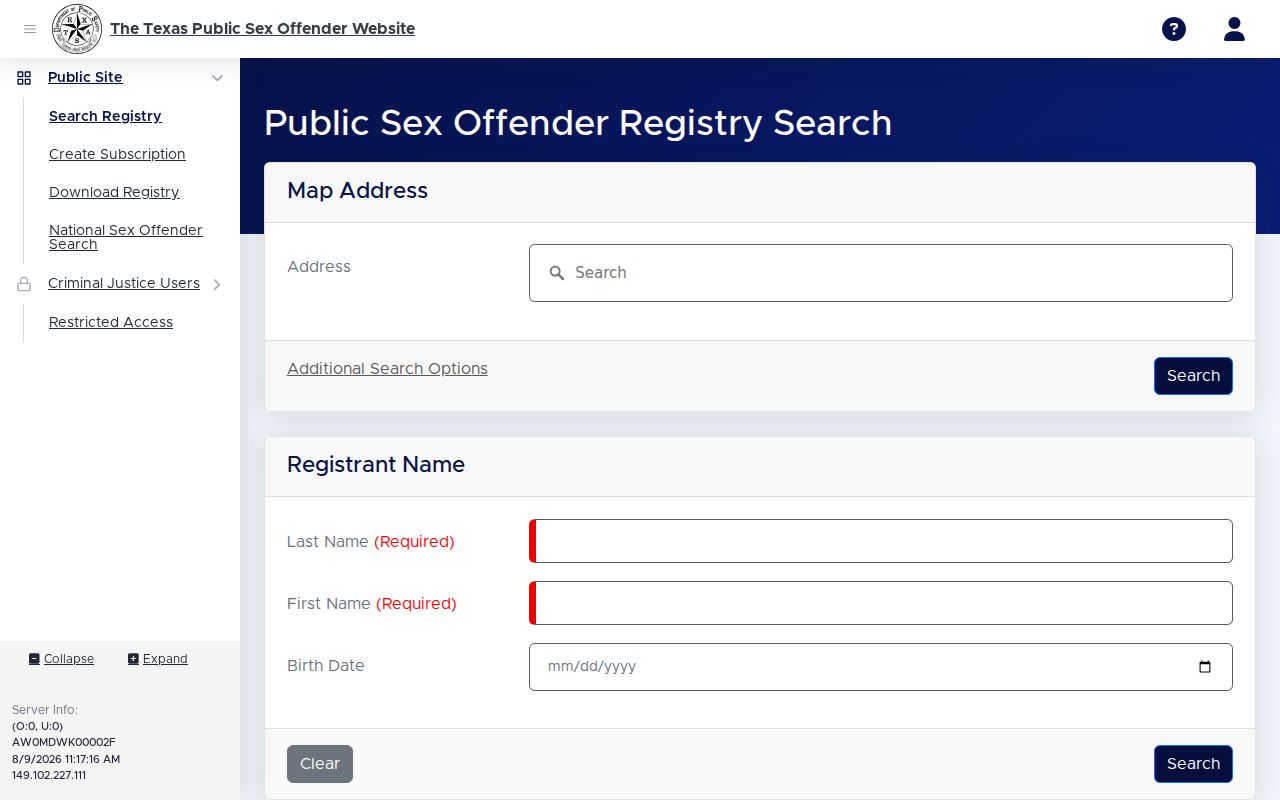
The screen makes an important point for Fisher County searches: the input needed depends on the selected mode, so a rejected query may reflect missing fields rather than a lack of records.
Searching the Texas Public Sex Offender Registry
DPS publishes the primary public registry for Fisher County. Read the Fisher County search conditions and warnings on the official page before entering a query. Then choose the narrowest useful mode and check the result against several identifiers. A close name alone is not enough, especially when aliases or common names appear.
- Open the DPS registry and select name, map/address, ZIP, county, or institute search.
- Enter each required field. For county mode, choose Fisher; for name mode, supply first and last name.
- Review the result list for birth date, photo, address, aliases, or other details that distinguish the correct profile.
- Open the profile, note its status and verification information, and confirm any urgent concern with the proper law-enforcement office.
| Field or Mode | Type | Required | Use |
|---|---|---|---|
| First and Last Name | Text | Yes in name mode | Find a known person; birth date may refine the result. |
| Detailed Address | Text fields | Street number, street, city, state, ZIP | Search around a specific Texas address. |
| County | Selector | Mode-specific | Select Fisher for a county-focused result set. |
| ZIP Code | Text | Mode-specific | Review registrations associated with one ZIP. |
| Map | Map controls | Varies | Explore a place visually rather than by name. |
| Institute / Campus | Dropdowns | Both required | Search a selected higher-education setting. |
Read the result list before opening a profile. Compare the displayed identity, reported location, status, and verification details instead of relying on one matching name. If the portal returns no result, review the selected mode and required fields before drawing a conclusion about Fisher County registration.
Fisher County Offender Map Context
A Fisher County map can show the relationship between reported addresses and a chosen place, but it is not a live movement tool. Registry addresses are supplied and verified under Chapter 62 duties. They can change, be corrected, or lag a move. The map also does not show that a person is present when the screen is viewed. Treat each marker as a path to a profile and its reported facts, not as real-time GPS.
The Texas registry map entry point illustrates the geographic route available for a Fisher County offender check.
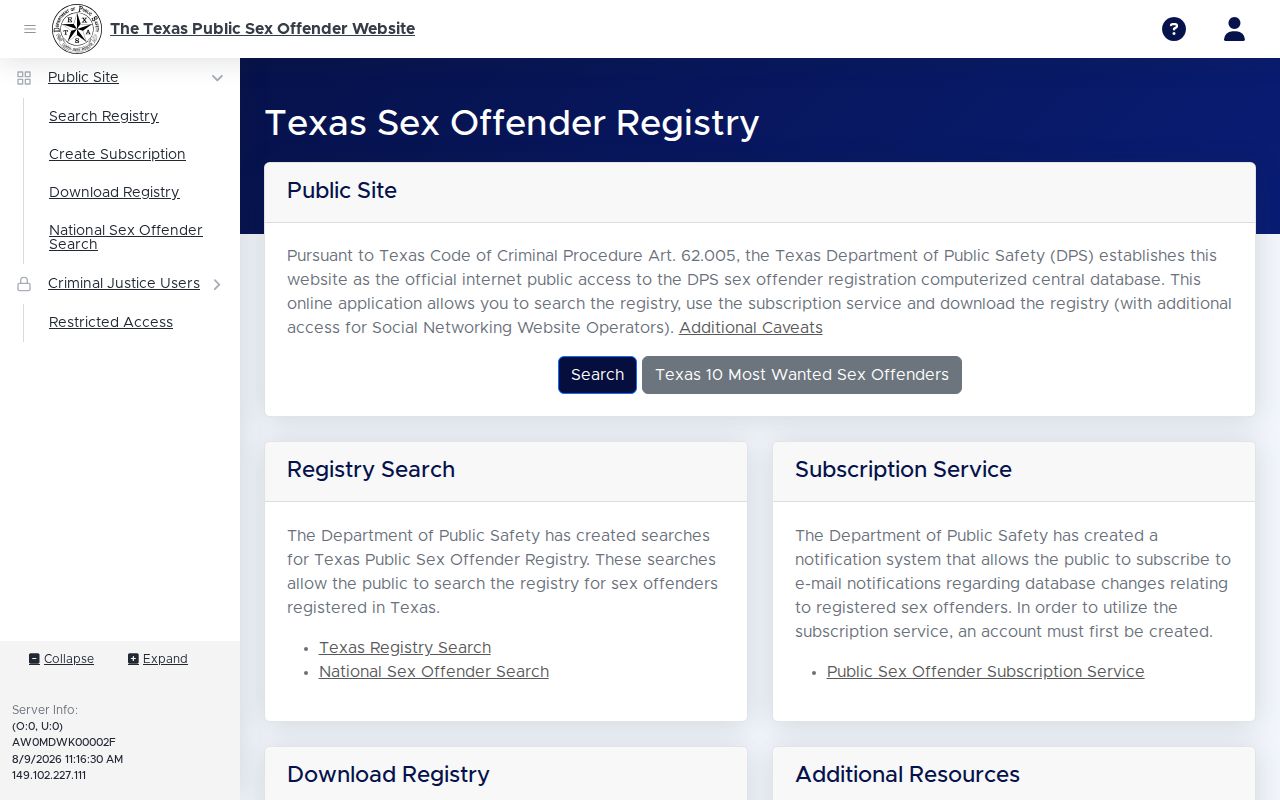
For a sound safety review, compare map results with the profile status and verification fields, then contact the sheriff about a specific discrepancy rather than approaching anyone shown.
Note: A reported registry address identifies an official record location, not a promise that the registrant is there at that moment.
What a Registry Profile Shows
A public Fisher County profile brings together identity, registration, and reportable offense information that Texas law allows DPS to display. The record may include a photo and aliases, physical traits, the reported residence, registration status, offense details, dates, supervision information, a Texas risk level, and certain school or vehicle data when reportable. Missing data is not proof that a fact does not exist. Some information was not reported, is not public, or is withheld by law.
| Name & Aliases | Displayed identity and known name variations used to distinguish records. |
|---|---|
| Photo & Description | Photo, sex, race, age or birth date, height, weight, hair, eyes, scars, marks, and tattoos when public. |
| Reported Address | The registered residence reported to authorities, subject to change and verification. |
| Offense Information | Reportable offense, statutory description, adjudication or conviction date, punishment, and victim-age category where public. |
| Risk Information | Texas numeric risk level or civil-commitment designation, not a federal registration tier. |
| Registration Status | Status, verification information, and related public duty details available in the record. |
Social Security numbers, driver-license numbers, phone numbers, online identifiers, victim identities, law-enforcement-only data, and certain juvenile information are not public profile fields. A profile match also does not establish new or current criminal activity.
Fisher County Offender Registration Contact
Local Fisher County registration and verification questions begin with the Fisher County Sheriff’s Office. The office is at 207 E. North 1st Street, Roby, TX 79543, and its phone is 325-776-2273. Call before visiting to confirm the registration appointment, the applicable verification schedule, required documents, and reporting instructions. The official sheriff page does not publish a separate registry-desk schedule or registration fee.
Fisher County Sheriff’s Office
207 E. North 1st St.
Roby, TX 79543
325-776-2273
Registration, verification, and local noncompliance contact. Confirm arrangements before travel.
If a listed detail appears wrong, record the profile information and the factual location or identity issue. Give that information to the sheriff or DPS. Emergency channels are for an immediate threat, not a routine address question. Direct contact with a registrant or household is neither needed nor appropriate.
Registration Requirements and Levels in Texas
Texas registration is based on the reportable offense and statutory duty. It also displays a state risk assessment. Level 1 means low risk and unlikely to continue, Level 2 means moderate risk and may continue, and Level 3 means high risk and will continue. Civil Commitment is a court designation for a sexually violent predator. These labels are not the federal SORNA Tier I, II, and III duration system.
| Texas Category | General Duration | Verification |
|---|---|---|
| Chapter 62 lifetime category | Lifetime, subject to the governing offense and exception | Set by statute and status |
| Other reportable category | Until the later of ten years after release or discharge from supervision | Generally annual for many registrants |
| Two or more sexually violent offenses | Duration follows the statutory category | May require verification every 90 days |
| Civil Commitment | Separate court-designated status | May require verification every 30 days |
Texas Code of Criminal Procedure Chapter 62 controls reportable events, verification, public fields, and duration. Article 62.101 generally separates lifetime duties from those ending on the later of the tenth anniversary of release or discharge from supervision. Juvenile and special provisions can differ, so a Fisher County profile’s level cannot by itself answer how long registration lasts.
Fisher County and National Registry Records
The Texas search is the primary source for a reported Fisher County registration. The National Sex Offender Public Website, maintained by the U.S. Department of Justice, adds value when a move, travel pattern, or nearby state is relevant. It searches participating jurisdictions through one national access point. It does not replace the source registry or the local sheriff, and differences can reflect update timing or state disclosure rules.
The official NSOPW search interface supplies that cross-jurisdiction layer for Fisher County residents.
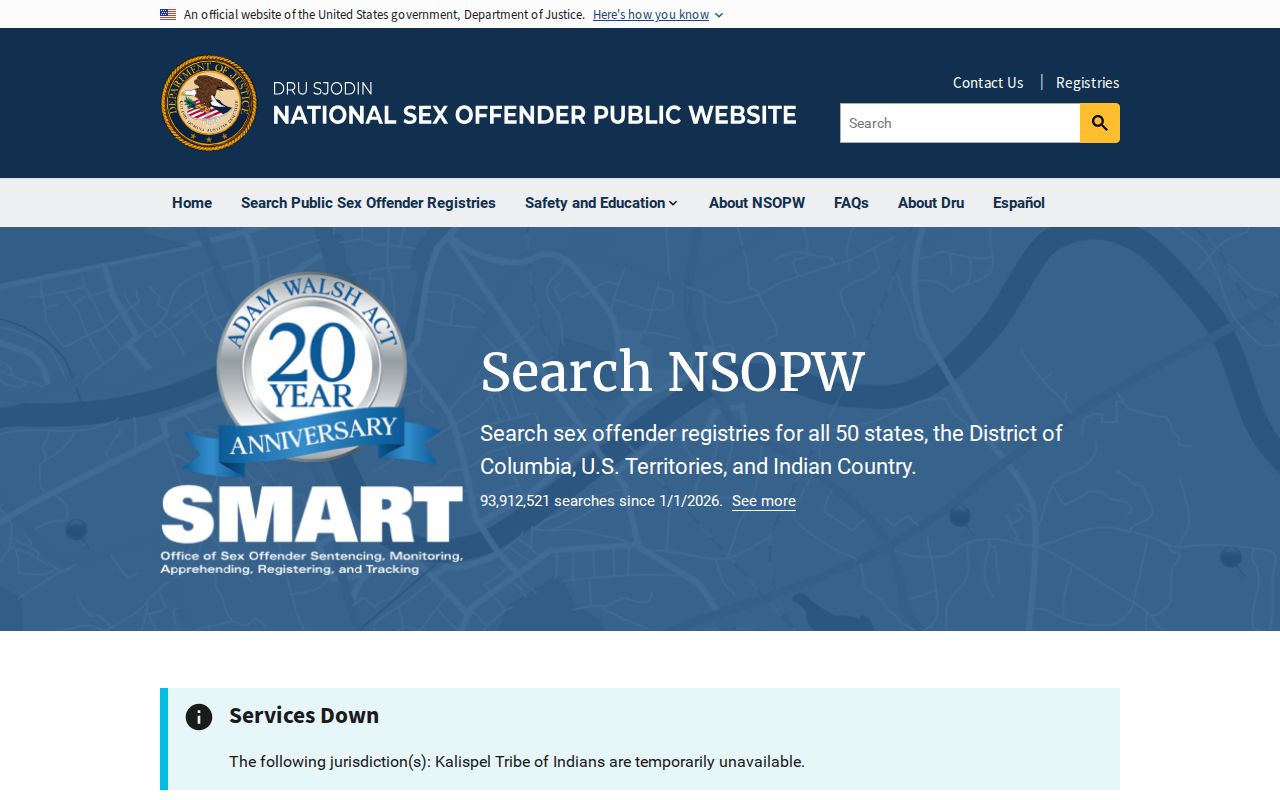
When the national and Texas results differ, open the source profile and ask the responsible registry or sheriff to explain the status rather than treating either screen as final by itself.
Fisher County Registry Level Myths
One common mistake is to convert Texas Level 1, 2, or 3 directly into a ten-year, twenty-five-year, or lifetime federal tier. Texas does not work that way. Risk level describes an assessment of risk, while registration duration follows Chapter 62 and the exact reportable category. The offense, release date, discharge from supervision, juvenile provisions, and other statutory rules may all matter.
The DPS registration FAQ provides state explanations of registry coverage, public fields, duties, and duration.
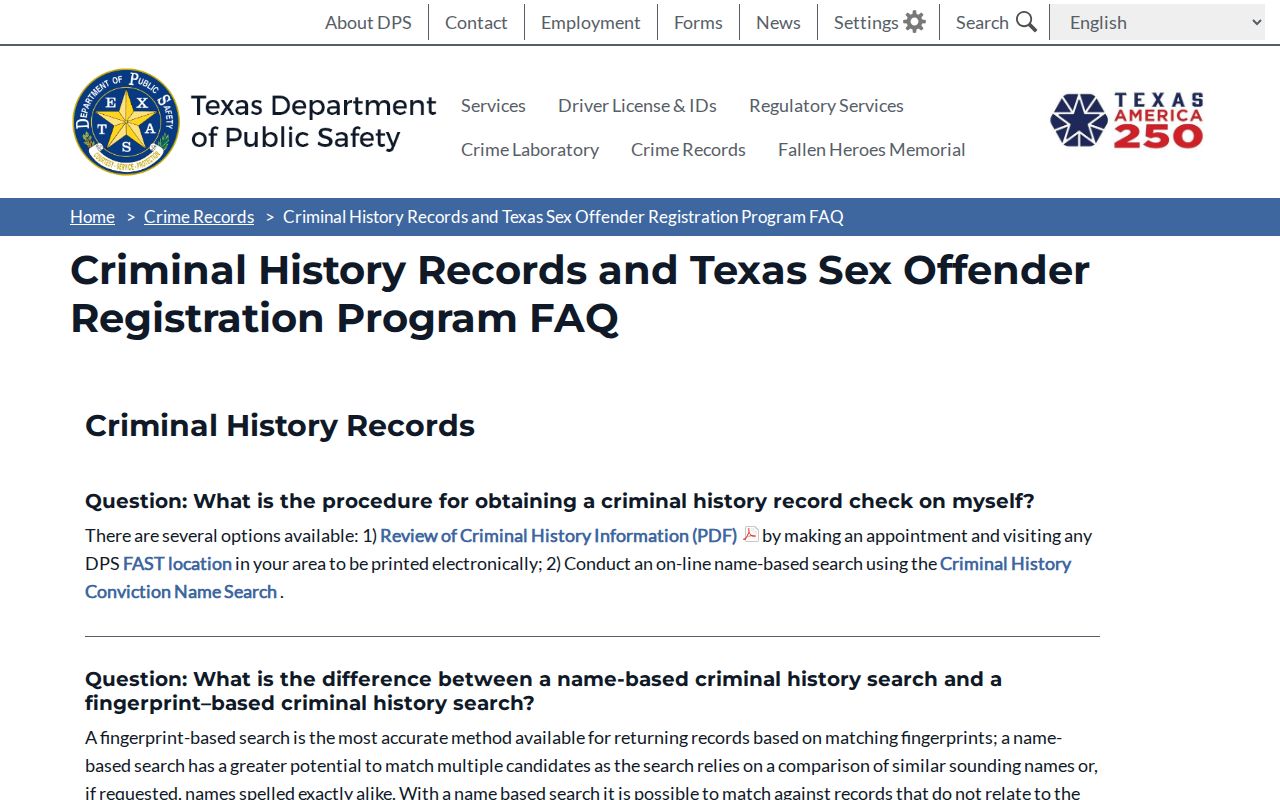
The FAQ is useful for reading terms, but an individual duty question may still require the underlying judgment, release information, and guidance from the registering authority.
Fisher County research also found no official countywide residency-distance ordinance. Local rules, parole conditions, and supervision terms can differ, so no general Fisher County buffer should be assumed.
Lawful Use and Community Notification
Registry information supports personal, family, and community awareness. Texas DPS offers subscription or notification functions for periodic updates, while the registry itself remains the source for current public profile data. Save the query details used and recheck when a reported move or boundary issue matters. For suspected noncompliance, provide facts to the Fisher County Sheriff or DPS. Do not investigate in person, publish accusations beyond the official record, or assume that registration means present criminal conduct.
Use registry data lawfully: DPS warns that using registry information to injure, harass, or commit a criminal act may violate Texas criminal or civil law under the Texas Sex Offender Registration Program. Never confront a registrant or household.
Public details can be incomplete or change after a verification event. A measured Fisher County sex offender check compares search modes, reads the complete profile, and routes a real discrepancy to an official office. That process protects community awareness without turning a public record into a claim the record does not support.